
It's Legal in More States Than Ever — But Is Your Plug-In Solar Panel Actually Safety-Certified?
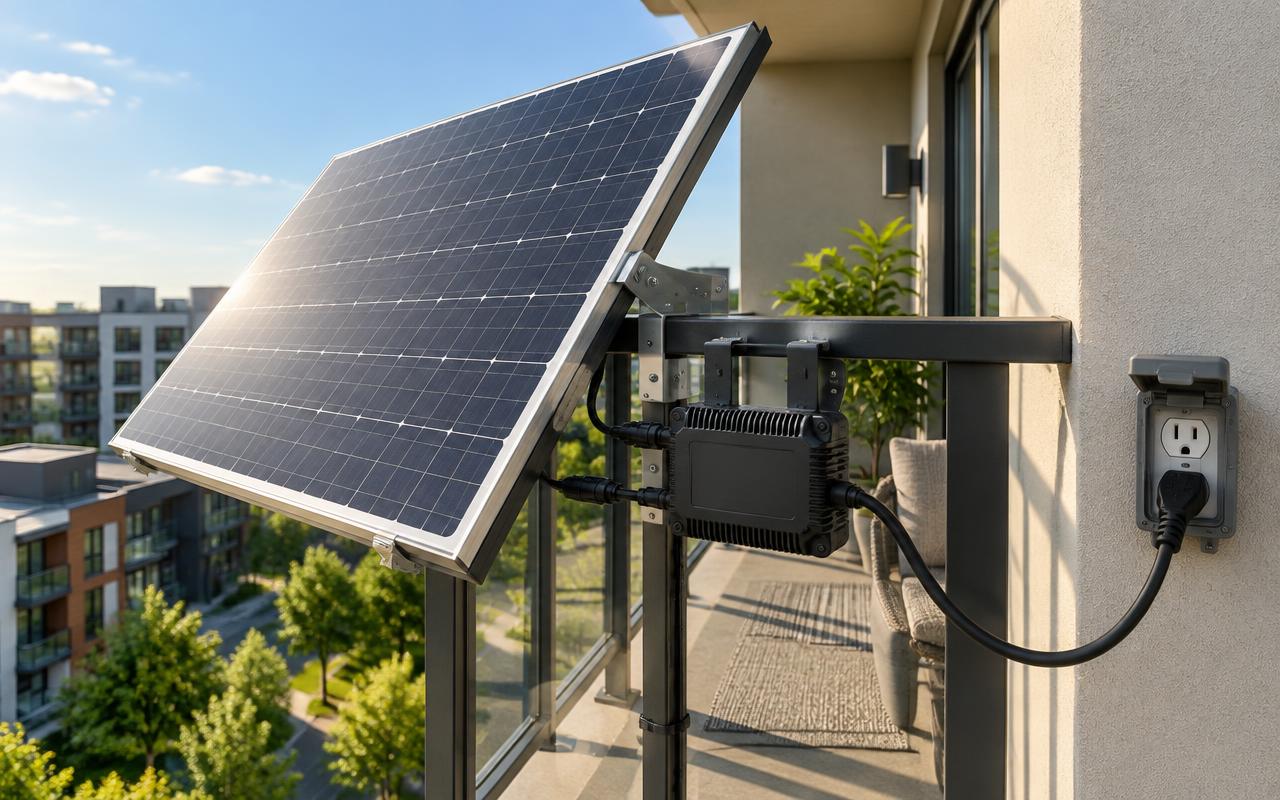
If you've been on the fence about balcony solar because you weren't sure it was even legal where you live, that excuse is disappearing fast — and it just got a lot bigger. On September 30, Governor Gavin Newsom signed California's SB 868, the “Plug Into the Sun Act,” making California the tenth state with a plug-in solar law and, with 39 million residents, by far the largest market to open up yet. That joins Utah, Virginia, Colorado, Connecticut, Maine, Maryland, New Hampshire, Vermont, and New Jersey. California's law caps systems at 1,200 watts, exempts them from utility interconnection paperwork and fees, and needs only a simple online notice listing your address and the device's make and model — it takes effect January 1, 2027. New York's SUNNY Act is still waiting on Governor Hochul's signature and Massachusetts' bill remains pending, with nearly 30 more states having introduced similar legislation this year.
That's genuinely good news, especially for renters, condo owners, and anyone whose roof isn't an option. But there's a wrinkle worth understanding before you buy: a state saying “this is legal” and a product being “safe to use” are two different things, and the gap between them has been the subject of a lot of recent reporting. The good news is that gap is closing — you just need to know what to look for.
Why “plug it into an outlet” needed its own safety standard
Regular rooftop solar has been regulated for decades under a standard called UL 1741, which assumes an electrician is hard-wiring equipment into your home's panel. Balcony solar breaks that assumption: you're pushing electricity backward through a wall outlet only ever designed to pull power out. That creates hazards nobody had written rules for — prongs that stay energized after you unplug, confusion with GFCI outlets (the ones with reset buttons in bathrooms and on patios), and, most seriously, the risk your panel keeps feeding power into the line during a blackout, endangering utility crews trying to restore it.
That's exactly why a new certification, UL 3700, was published in December 2025 — the first US safety standard built specifically for plug-in solar. It tests the whole kit (panel, cable, plug, and microinverter) together, and it checks five specific things: that exposed prongs go dead within a second of unplugging, that the system shuts itself off fast enough during a power outage that it won't endanger line workers, that it won't overload your circuit, that it plays nicely with GFCI outlets, and that outdoor parts can actually survive weather.
What's certified right now — and what to check before you buy
Here's the part that's moved fast: as recently as this summer, no product on the market fully met the new standard. That's already changed — the APsystems EZ1 microinverter has shipped UL 3700-certified since August, and Hoymiles' HiFlow Pro was certified in July, with wider availability coming. More manufacturers are racing to catch up.
So before you buy anything — from us or anyone else — look for “UL 3700” (or “CSA Certified to UL 3700”) printed on the product or its listing. If you see UL 1741 instead, that's the older rooftop standard; it's not a red flag by itself, but it wasn't designed with plug-in hazards in mind, so UL 3700 is the more complete answer. If you see no certification mark at all, treat that as a real warning sign, not a technicality — that's precisely the gap regulators and safety advocates have been raising alarms about.
It's also worth checking your specific state's rules, since they vary on details like wattage caps (most around 1,200 watts), notice periods for landlords, and whether HOAs can restrict placement. New Jersey requires just 14 days' notice to a landlord; California doesn't take effect until January 1, 2027, and its utility-friendly terms carry a 2030 sunset date lawmakers added late in the process — a reminder these laws are still fresh and can keep changing. Don't assume “legal” means “legal today” where you live, and don't assume today's rules are the last word, either.
The bottom line: balcony solar is having a real moment, both in statehouses and in the safety labs working to catch up with it. That's a genuinely good problem to have — it means the technology got popular faster than the paperwork. Just make sure the panel you plug in has actually caught up too.
See where plug-in solar stands in your state
Further Reading
- Newsom signs California plug-in solar bill, establishing the nation's largest balcony solar market — pv magazine USA
- California gives the green light to balcony solar — Electrek
- California To Allow Balcony Solar After Newsom Signs Bill — Bloomberg
- States OK solar panels for balconies. Safety guidelines haven't caught up. — Stateline
- The US's first UL 3700 balcony solar microinverter is here — Electrek
- What Is UL 3700? The Plug-In Solar Safety Standard Explained — Simple Plug-In Solar
- Gov. Sherrill signs bill aimed at expanding balcony solar — New Jersey Monitor
- New York legislature passes SUNNY Act plug-in solar legislation — pv magazine USA
Share this
Comments
Loading comments…
Leave a comment
Comments are reviewed before they appear.