
New Jersey just told landlords and HOAs they can't ban balcony solar. Here's what that actually means.
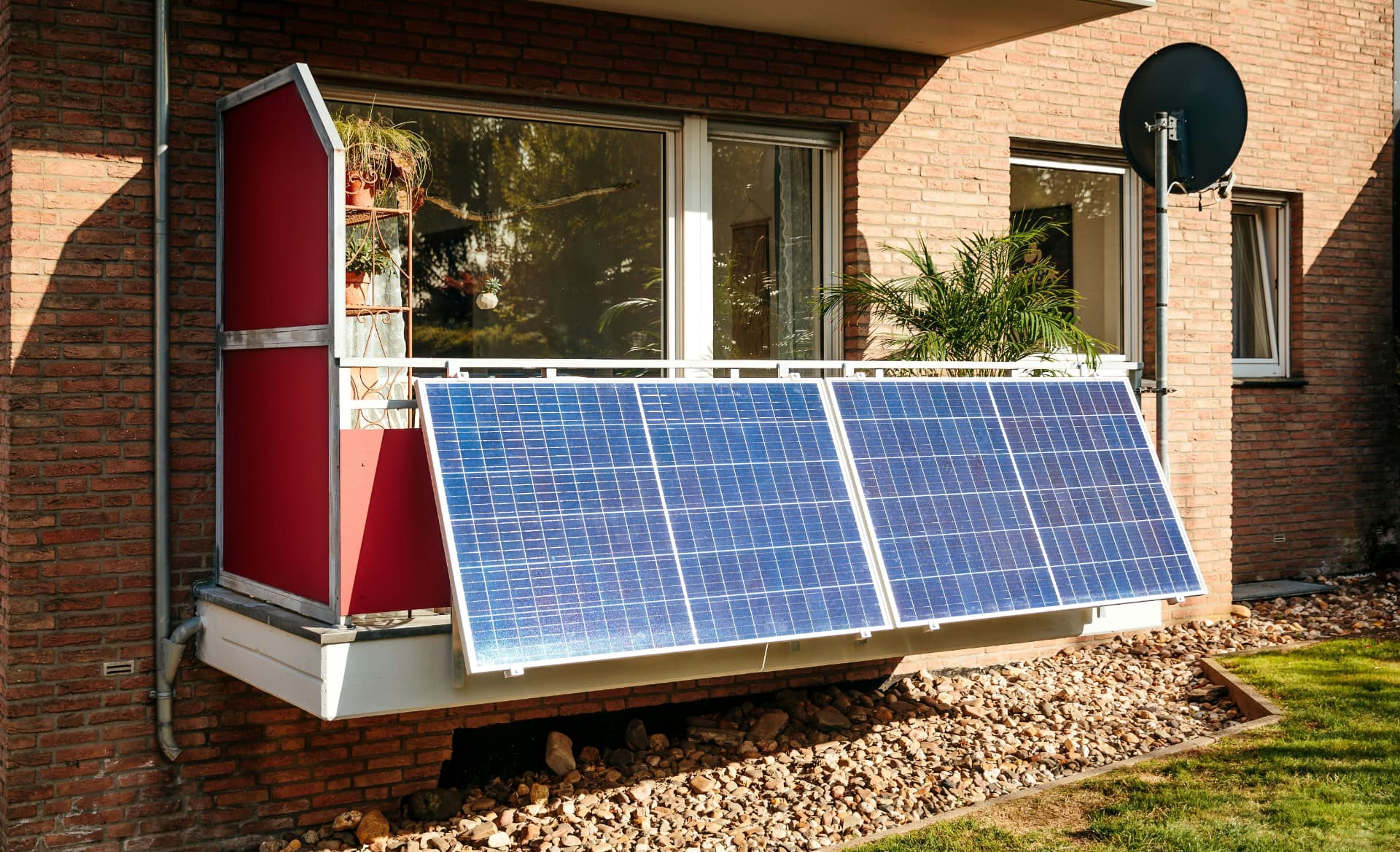
On September 1, Governor Mira Sherrill signed the Garden State Balcony Solar Act, making New Jersey roughly the ninth state to put plug-in solar into law. The wattage cap and the “no permit needed” headline are familiar by now if you've followed this space. What's genuinely new here — and worth its own post — is what the law does to the people who usually have the final say over what a renter can plug in: landlords, condo boards, and municipal governments.
The part that matters: you can't be banned outright
Most state plug-in solar laws so far have focused on the utility relationship — no interconnection application, no extra fees, no waiting on approval. New Jersey does that too (systems up to 1,200 watts, meeting UL 3700 or an equivalent safety standard, don't need a permit, a license, or a utility sign-off). But the Act goes a step further and reaches into leases and HOA bylaws directly.
Landlords, homeowners associations, and municipalities can no longer adopt a blanket ban on plug-in solar for a tenant or owner who pays their own electric bill. They can still set reasonable rules — where on the balcony it can go, how big it can be, a liability waiver — and a tenant has to give 14 days' written notice before installing. But an outright “no solar” clause in a lease or a condo rulebook is no longer enforceable once the law takes effect.
That distinction is the reason this law is getting more attention than the average state plug-in bill. Roughly 70% of U.S. households can't put solar on their own roof — because they rent, because an HOA controls the exterior, because the roof faces the wrong way, or simply because they don't own it. A wattage cap that removes utility red tape doesn't help someone whose lease already says no personal appliances on the balcony. A rule that overrides the lease does.
What it doesn't do
It's worth being precise about the limits, because it's easy to oversell a law like this. The 1,200-watt systems it covers are exempt from net metering — you won't get bill credits for excess power sent back to the grid, because these systems generally aren't designed to send much back. They're built to offset your own baseline draw (the refrigerator, the router, the stuff that runs all day), not to zero out your bill. Estimates in early coverage put realistic monthly savings around $50, not a rooftop-sized number.
The law also doesn't take effect immediately. It's written to phase in six months after signing, putting the practical start date around March 1, 2027. If your lease currently bans balcony solar, that clause stays enforceable until then. Worth knowing before you buy a kit expecting to plug it in next week.
And the safety requirement isn't cosmetic. Systems have to include automatic shutoff during a power outage — the same anti-islanding behavior required of any grid-connected inverter, so a lineworker repairing a downed line isn't exposed to power your panel is still feeding backward into the circuit. UL 3700 (or an equivalent) is the standard that verifies a product actually does this. It's a reasonable line for a state to draw, and one more reason to buy a certified kit rather than an uncertified import.
Why this is happening now
New Jersey's bill passed the legislature unanimously back in July, which tells you this wasn't a partisan fight — it tracks a broader pattern of both red and blue states passing similar laws this year as household electricity demand and prices climb, driven in part by data center growth on the grid. The politics here are less about renewable energy as an ideology and more about a straightforward question: if a $200 device can shave something off a power bill without touching the grid in any way that concerns a utility, why should a lease clause or a local ordinance be the thing standing in the way?
If you're a renter in New Jersey, the practical takeaway is patience, not urgency: the protection is real, but it isn't live yet. If you're elsewhere, it's worth checking whether your own state's law — if you have one — addresses leases and HOA rules at all, or only the utility side of the equation. Those are two different problems, and so far, most states have only solved one of them.
See where plug-in solar stands in your state
Further reading
- Governor Sherrill Signs Legislation Giving New Jerseyans Cleaner, More Affordable Energy at Their Fingertips — Office of the Governor of New Jersey — provisions and quotes
- New Jersey just made plug-in solar panels legal — Electrek — wattage, UL 3700, and effective-date detail
- Gov. Sherrill signs bill aimed at expanding balcony solar — New Jersey Monitor — landlord, HOA, and renter provisions
- New Jersey governor signs balcony solar bill to law — Solar Power World
- NJ Balcony Solar Act allows plug-in solar panels — NJBIZ
- Trump Twiddles Thumbs While Balcony Solar Takes Over US — CleanTechnica — national state-count context
- New Jersey legislature unanimously passes plug-in solar bill — pv magazine USA — background on the July vote
Share this
Comments
Loading comments…
Leave a comment
Comments are reviewed before they appear.