
California Just Legalized Plug-In Solar — But Your Wall Outlet Still Has a Say
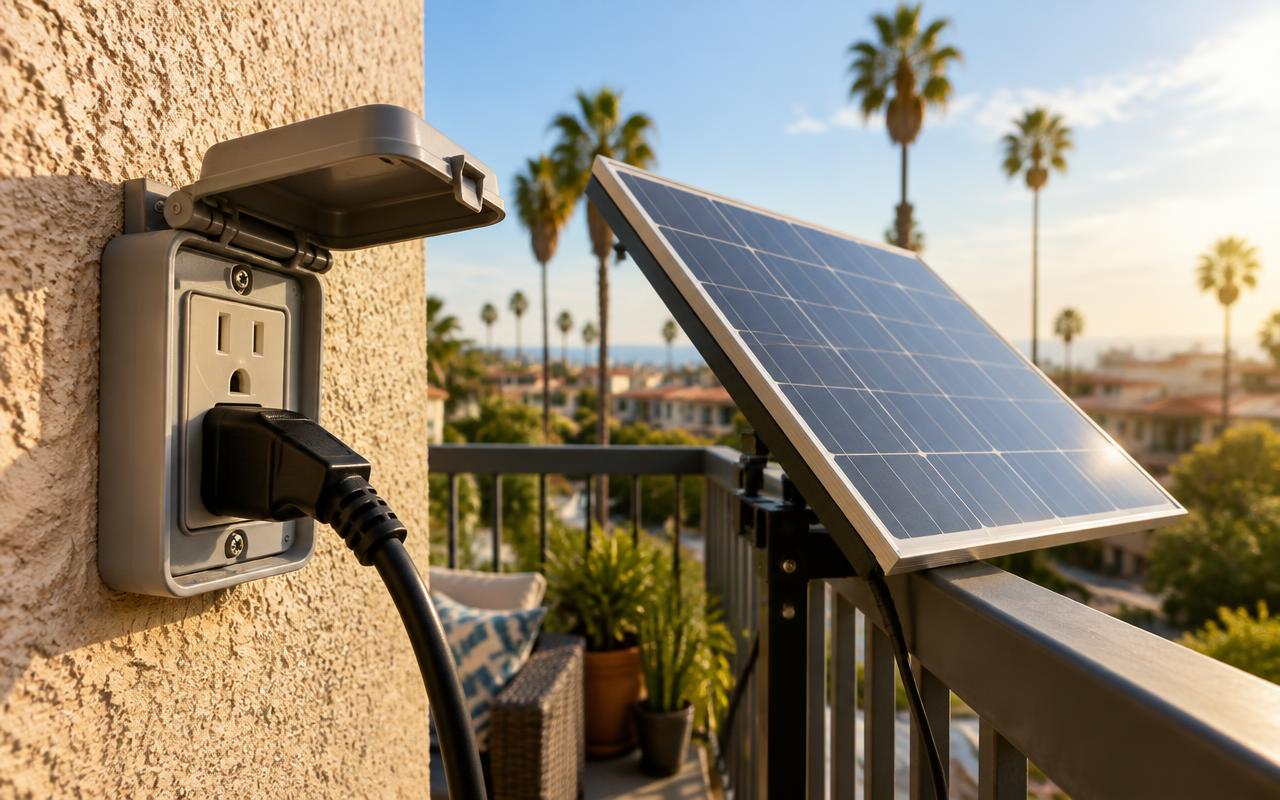
On October 2, Governor Gavin Newsom signed SB 868, the “Plug and Play Solar Act,” making California the 10th state to legalize plug-in balcony solar. It's the biggest win yet for the plug-in solar movement — California is the country's most populous state, and an estimated 14 million rental units (roughly 40% of California households) are now eligible for a technology that used to live in a legal gray zone.
That's genuinely good news. But there's a detail buried in the coverage that most consumers are going to miss, and it matters more than the headline: the law lets you install up to 1,200 watts of plug-in solar without a permit or utility approval. Your outlet, however, was never consulted — and it has a much lower opinion of how much power it wants to carry.
What SB 868 Actually Does
Under the new law, California residents (owners and renters alike) can plug a portable solar setup into a standard wall outlet without going through permitting or utility interconnection review, as long as the equipment is UL-certified (or equivalent) and includes an automatic shutoff that kills power during a grid outage — a safety feature that protects utility workers from backfeeding electricity into lines they think are dead.
State Senator Scott Wiener, who authored the bill, framed it around affordability: “Electricity costs have reached ridiculous levels here in California,” he said, and these devices “will give everyone, including renters, the relief they desperately need.” Industry groups echoed that renters — who've historically had zero path to solar because they don't own their roof — are the real audience here. The law doesn't take effect until January 1, 2027, so nothing changes at your outlet tomorrow, but the clock is now running.
One wrinkle worth watching: the exemptions carry a 2030 sunset clause, meaning lawmakers will need to act again to keep them in place. Advocates are counting on wide adoption between now and then to make that renewal politically easy.
The 1,200-Watt Number Is a Ceiling, Not a Target
Here's the part that trips people up: 1,200 watts is the legal maximum the state will allow without extra oversight — not the amount your existing wall outlet can actually handle.
A standard US household outlet sits on a 15-amp circuit at 120 volts. Electrical code requires keeping a continuous load under 80% of that circuit's capacity, which works out to roughly 360 watts that you can safely draw (or in this case, push back out) through an ordinary outlet without any electrical work. That's the real-world ceiling for true “unbox it, plug it in, done” setups — which is why most plug-in solar kits on the market today are sized in that 300–400-watt range, regardless of what the law allows.
To get anywhere near California's full 1,200-watt allowance, you'd need a dedicated circuit installed by a licensed electrician — which is a straightforward, inexpensive job, but it is a job, and it's a different conversation than the “no permit, no electrician, no utility call” pitch that's driving a lot of the enthusiasm around these laws. California's cap is also notably generous: it matches the ceiling most plug-in solar states have settled on (Colorado goes further, up to 1,920 watts), but the law raising the ceiling doesn't raise what a standard outlet can take.
What This Means If You're Shopping for a System
If you're in California — or any of the nine other states that now permit plug-in solar — the practical takeaway is to separate two decisions. First, how much power do you actually want to offset, and second, what will your current wiring support without modification. A 400-watt kit plugged into an existing outlet gets you a legitimate dent in your electric bill with zero electrical work. Pushing toward the legal maximum gets you more savings, but budget for an electrician's visit as part of that math, not as an afterthought.
Either way, confirm any system you buy is UL 1699B certified (or the equivalent safety listing your state's law specifies) and includes the automatic shutoff feature — that's non-negotiable under every one of these state laws, California included, and it's the feature that keeps you from accidentally sending power down a line a utility worker thinks is safe to touch.
See where plug-in solar stands in your state
Further Reading
- Newsom Signs California Plug-In Solar Bill, Establishing the Nation's Largest Balcony Solar Market — PV Magazine
- California Governor Newsom Signs VPP and Balcony Solar Bills, Vetoes Community Solar Legislation — Energy Storage News
- New Jersey Becomes Ninth US State To Legalize Plug-In Solar — TaiyangNews
- Why Plug-In Solar Kits Max Out at 360W — BrightSaver
- The 1,200-Watt Cap — Wild Tech
Share this
Comments
Loading comments…
Leave a comment
Comments are reviewed before they appear.