
California Just Legalized Balcony Solar — So Why Can't You Buy One Yet?
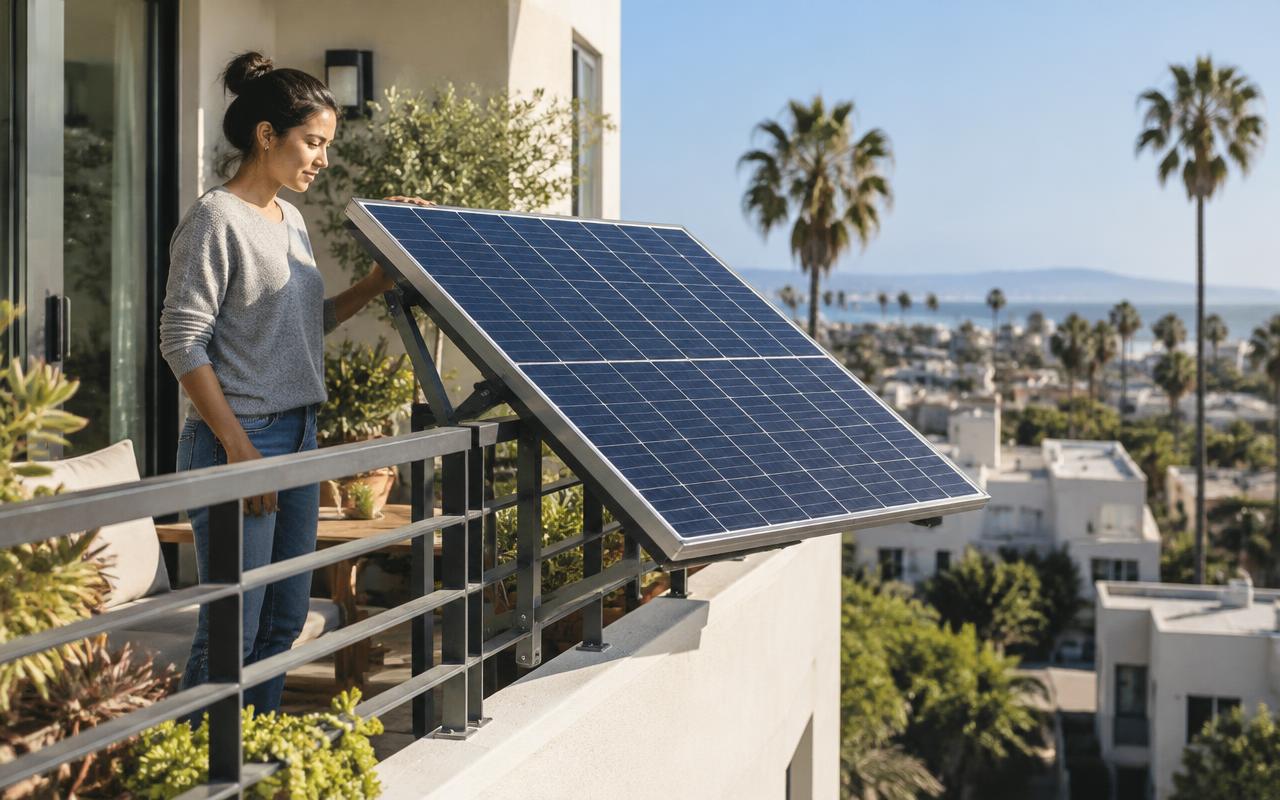
If you've seen headlines this month calling California the nation's newest (and biggest) balcony solar market, you're not imagining things. On September 30, Governor Newsom signed SB 868 — sometimes called the Plug and Play Solar Act, sometimes the Plug Into the Sun Act, because apparently nobody could agree on a name — and it's a genuinely big deal for the roughly 14 million rental units and countless condo and apartment dwellers across the state.
But here's the part most of the headlines buried: the law being signed doesn't mean you can plug a panel into your balcony outlet in California today. There's a gap between "legal" and "available," and it's worth understanding before you go shopping.
What SB 868 Actually Changes
The law does what balcony solar advocates have been pushing for in state after state: it lets you plug a small solar setup directly into a standard 120-volt wall outlet, without a permit, without an electrician, and without asking your utility for advance permission. The specifics:
- Size cap: up to 1,200 watts of AC output per household — plenty to offset a fridge, a router, some lighting, and other everyday loads.
- Safety requirement: the system has to be certified by UL or an equivalent testing lab, and it has to automatically stop feeding power back to the grid during an outage (so utility crews working on downed lines aren't at risk).
- No utility gatekeeping: utilities can't charge a fee or demand a formal interconnection agreement. At most, they can ask you to submit a simple online notice with your address and the equipment's make, model, and size.
- Effective date: January 1, 2027. There's also a wrinkle added late in the process — the utility-fee exemption is set to sunset in 2030 unless lawmakers renew it, something advocates are already gearing up to fight for.
State Senator Scott Wiener, who authored the bill, put it plainly: these panels are meant to give renters in particular — people who can't put panels on a roof they don't own — a real way to cut their power bill.
The Catch: The Law Arrived Before the Products Did
Here's the detail that matters most if you're excited to try this in California specifically: the law requires full system certification under UL 3700, a standard written specifically for these plug-in solar devices that only became available in early 2026. That certification process takes time, and as of this writing, at least one major plug-in solar retailer has said outright that it isn't yet shipping fully certified kits to California, even though it's actively selling them in states like Utah, which passed its own enabling law back in 2025.
In other words: California didn't make balcony solar legal and then wait for the market to show up. The market is now racing to catch up to the law. Expect the first fully certified, California-compliant kits to start reaching customers sometime in 2027, with availability likely expanding through the year as more manufacturers complete testing.
What to Do If You're in California (or Watching a Similar Bill in Your State)
If you're a renter or homeowner hoping to take advantage of this, the practical move right now isn't to buy the first "balcony solar" listing you find online — it's to wait for a kit that's explicitly certified to the full UL 3700 standard, not just a general UL listing on the inverter alone. A reputable seller should be able to tell you clearly whether their system meets that bar for your state.
It's also worth checking in with your landlord or HOA now rather than later. Unlike some of the newer state laws (New Jersey's, for instance, explicitly bars HOAs from banning the devices outright), California's law doesn't yet spell out HOA and landlord obligations in the same detail — so a quick, friendly conversation before you install anything can save a headache down the road.
The bigger picture is still a good one. With eight other states and the District of Columbia having already passed similar laws, and dozens more considering them, the direction of travel is clear: plug-in solar is moving from a niche DIY project to a mainstream, code-recognized way to shave down a power bill. California just put the loudest exclamation point on that trend yet — the products just need a few more months to catch up to the paperwork.
Further Reading:
- Newsom signs California plug-in solar bill, establishing the nation's largest balcony solar market — pv magazine USA
- California gives the green light to balcony solar — Electrek
- California Advances Balcony Solar Bill as 28 States Consider Similar Legislation — Propmodo
- Is plug-in solar legal in California? — Bright Saver
Share this
Comments
Loading comments…
Leave a comment
Comments are reviewed before they appear.