
Your Balcony Solar Panel Is Legal Now. Is It Insured?
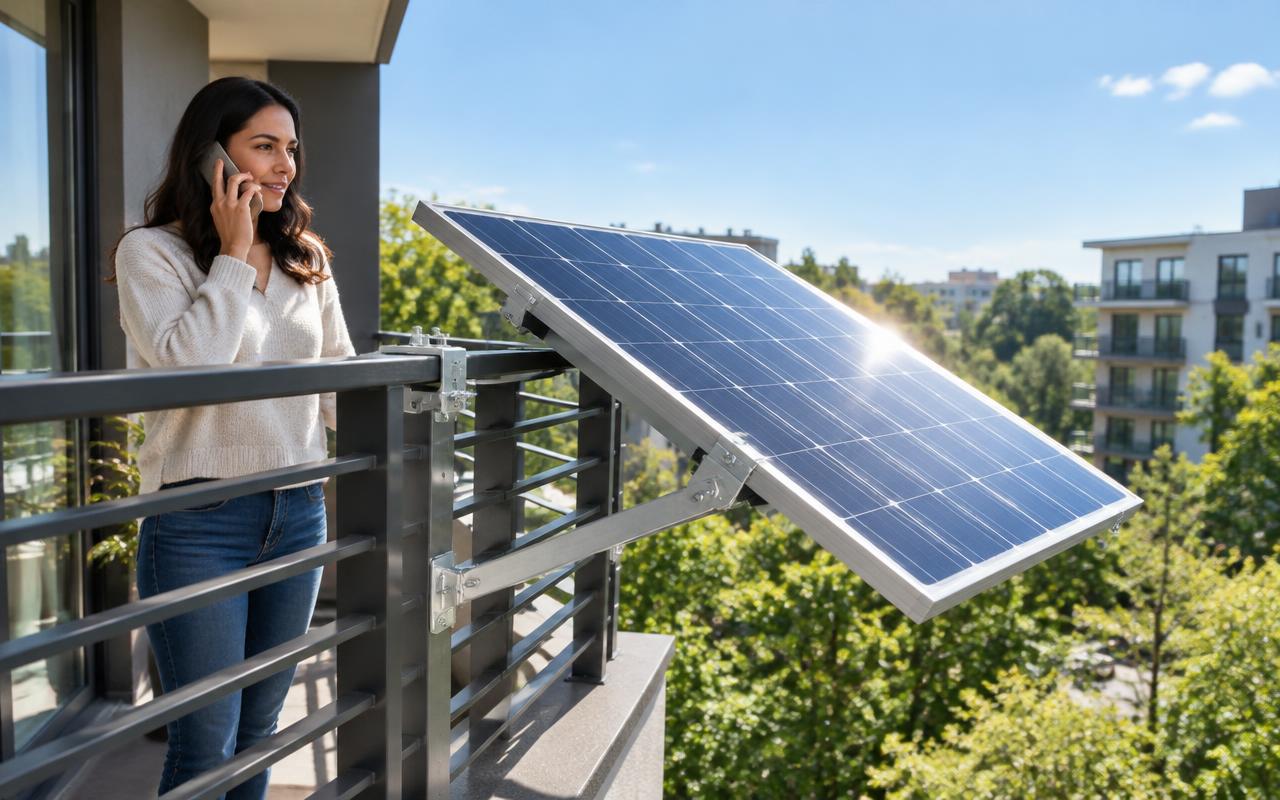
Ten states have legalized plug-in solar this year. New Jersey's law, signed September 1, went further than most: it bars landlords, HOAs, and condo boards from banning the devices outright. Towns can't require a permit. A board can't just say no anymore.
But buried in that same New Jersey law is a detail worth more attention than it's gotten: boards can still require residents to carry insurance for the panel before it goes up. Not a suggestion — a condition. And that raises a question most new owners haven't asked yet, because until recently the laws didn't give them a reason to: does your policy actually cover a $300 panel clamped to a railing?
The honest answer is: probably, with caveats, and you should find out before you plug anything in rather than after something goes wrong.
Where a balcony panel fits on your policy
Homeowners insurers generally sort solar into two buckets. A panel bolted to your roof gets treated like part of the house — it falls under dwelling coverage, the same bucket as your siding and windows. Something that isn't attached to the structure — a ground-mounted array, a shed, a portable unit — usually falls under "other structures" or personal property instead, with its own lower payout cap.
A plug-in panel clamped to a railing sits in a gray zone between those two. It isn't part of the building, but it isn't quite loose personal property either — it hangs outside, exposed to wind and rain, where a lot of standard contents coverage gets fussier about what counts. Insurers that have started writing guidance on plug-in systems specifically note that coverage for items kept outdoors often comes with its own conditions, separate from how the same item would be treated sitting in your living room.
Renters have a related but different problem. A renters policy covers your belongings, including ones you keep outside, but "outside" property often has a lower sub-limit than everything else you own, and a landlord's building policy almost never extends to a tenant's own equipment. If your panel is stolen off the railing or a storm sends it into the parking lot, you're the one filing the claim — not the building.
Tell your insurer first, not after
The simplest fix is also the most skipped step: call your insurer, or your renters insurance company, before you install anything, and ask directly whether a balcony-mounted solar panel is covered and under which part of the policy. Ask about three things specifically: theft of an item kept outdoors, wind or storm damage, and liability if the panel ever falls and injures someone or damages property below. That last one matters more than it sounds — a panel is light, but a railing clamp failing four stories up is not a small liability question, and it's exactly the kind of claim a generic contents policy may not anticipate.
This is also where product choice earns its keep. Installers and insurers point to UL 3700 certification — the safety standard written specifically for these plug-in systems — as a good starting point for that conversation, since it means the mounting hardware has been tested against pull-away force and weather exposure rather than improvised.
The HOA angle cuts both ways
New Jersey's model — can't ban it, can regulate it — is becoming the template other states are copying. The regulation side usually includes a requirement that residents indemnify the association for claims tied to a bad install, and increasingly, proof of insurance. That's a reasonable ask from a board's perspective. It's also a reason not to treat "my state legalized this" and "I'm covered if something happens" as the same fact. They aren't decided by the same document.
Before you plug in
Three calls are worth making before the panel goes on the railing: your insurer, to confirm what's covered and where; your HOA or landlord, in writing, since several new laws require notice even where they can't require approval; and the manufacturer, to confirm the mounting hardware is UL 3700 certified. None of that costs anything, and all of it is cheaper than finding out the hard way which bucket your panel fell into.
Further Reading
- Governor signs balcony solar energy bill — New Jersey Monitor
- NJ's New Balcony Solar Law — Law GA PC
- Does Homeowners Insurance Cover Solar Panels? — Lemonade
- Are Plug-in Solar Panels Covered on Your Typical Home Insurance? — Insurance Edge
- The Renter's Guide to "No-Drill" Balcony Solar: Mounting, Safety, and Shading — Solar.com
Share this
Comments
Loading comments…
Leave a comment
Comments are reviewed before they appear.