Balcony Solar Is Now Legal in Nine States — But Is the Gear Actually Safety-Certified?
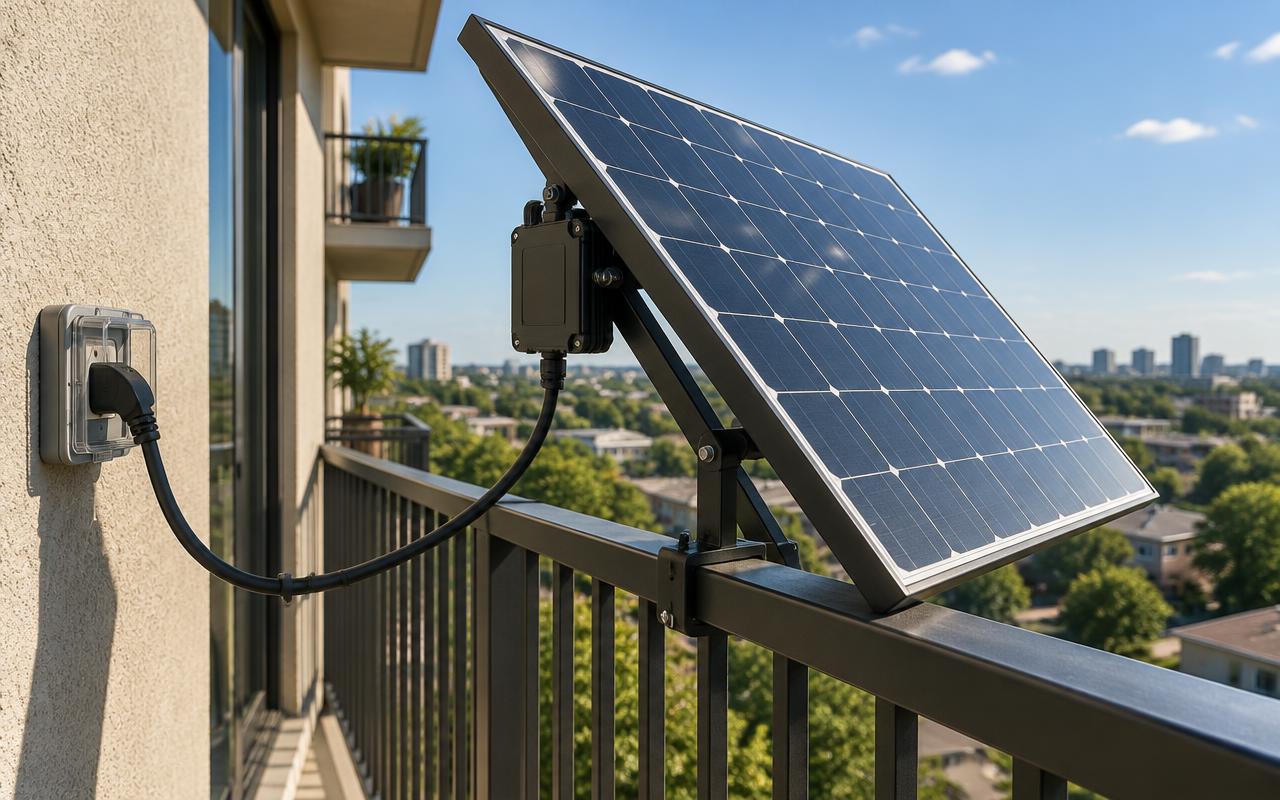
If you've been following balcony solar news this year, you've probably noticed the pace: a new state seems to legalize plug-in panels almost every month. Utah went first. Virginia, Colorado, Connecticut, Maine, Maryland, New Hampshire, New Jersey, and Vermont followed, and nearly 30 more states have bills in the pipeline. California just formally signed on, and New York is close behind.
That's genuinely exciting progress. But "legal" and "safety-certified" are two different things, and the gap between them has been the single biggest sticking point for regulators, utilities, and cautious consumers alike. This week seemed like a good moment to explain exactly what that gap is, how fast it's closing, and what it actually means for you if you're thinking about plugging a panel into your own balcony.
Why plug-in solar needed its own safety standard
Here's the plain-language version of the concern: a normal wall outlet is built to send power one direction, from the grid into your home. Plug-in solar flips that, sending power from your panel back out through the outlet. Do that with the wrong gear, and you risk overloading a circuit that wasn't designed to carry extra current, or — worse — back-feeding power onto utility lines during an outage, which can put repair crews at real risk.
For years, there simply wasn't a dedicated U.S. safety standard built around that specific risk. Manufacturers were improvising, state lawmakers were legislating around a technical question nobody had formally answered yet, and fire officials were understandably nervous. That's why, even after a state legalized balcony solar, you'd still see headlines about safety guidelines "not catching up" to the law.
That changed in December 2025, when UL Solutions — the same organization behind the familiar "UL Listed" mark on your appliances — published UL 3700, the first North American safety standard written specifically for plug-in solar equipment. It lays out exactly what a certified kit has to do: cut power at the prongs the instant it's unplugged, shut itself off automatically during a grid outage, cap its output so it can't overload your home's wiring, cut off instantly if it detects a ground fault, and hold up to outdoor weather. UL Solutions describes it as opening "a path for more people to access resilient solar power" without the guesswork.
What's actually certified right now — and how to check before you buy
A standard is only useful once products actually pass it, and that part is now happening too. As of this fall, a handful of products have earned UL 3700 certification, including Hoymiles' HiFlow Pro microinverter (the first to clear the bar, back in July), APsystems' EZ1 microinverter, and the Mango Power S kit, which bundles panels, microinverters, and mounting hardware together. More are expected to follow as manufacturers work certification into their product lines.
That's good news, but it also means the market still has a mix of certified and uncertified products sitting side by side, and the burden is currently on the shopper to tell them apart. Before you buy a plug-in system, it's worth doing three quick things:
First, confirm your state actually allows plug-in solar, and check whether it specifically requires UL 3700 certification — some newer laws name the standard outright. Second, look for the UL 3700 mark on the kit itself, or more specifically on its microinverter, since that's the component doing the safety-critical work. Third, if it's not clearly labeled, just ask the seller directly for documentation before you hand over any money. A legitimate manufacturer should be able to produce it without hesitation.
It's also worth knowing this debate isn't settled everywhere. In Hawaii, a balcony solar bill stalled in the legislature this year largely over these exact safety questions, and advocates there are already planning a 2027 push built around the UL 3700 framework as the answer. That's a useful reminder that the legal and safety tracks are still converging state by state, not finished.
The short version: the legislative wave gets the headlines, but the safety standard is what actually makes balcony solar trustworthy to install. The good news is that gap is closing fast — just make sure the kit you're looking at has already closed it too.
See where plug-in solar stands in your state
Further Reading
- States Allow Solar Panels for Balconies. Safety Guidelines Haven't Caught Up — Fire Engineering
- UL Solutions Debuts Testing and Certification Framework for Safer Plug-In Solar Across the United States — UL Solutions
- How to Design a UL-Certified Balcony Solar Kit in the United States — PV Magazine
- UL 3700 Certification: Which Plug-In Solar Products Have This Safety Stamp? — Solar.com
- Column: Balcony Solar Can Ease Isles' High Energy Costs — Honolulu Star-Advertiser
Share this
Comments
Loading comments…
Leave a comment
Comments are reviewed before they appear.